Unlocking the Language of Construction: A Handy Glossary for Every Project
Do you ever feel like you’re in a foreign land when stepping onto a construction site, surrounded by jargon and technical terms that sound like a different language? You’re not alone. Whether you’re a seasoned professional or a DIY enthusiast, understanding the language of construction is crucial to the success of any project. Have you ever wondered how much easier your projects would be if you spoke the language of construction fluently? In this article, we’ll break down key glossary of construction terms that will help you navigate any construction project with confidence and ease.
Key Takeaways
- Gain a comprehensive understanding of essential construction terms
- Learn the crucial differences between general and specific construction jargon
- Discover the importance of safety and sustainable language in construction
- Enhance your project management and communication skills on-site
- Access a construction glossary of commonly used terms in construction projects
General Construction Terms You Should Know
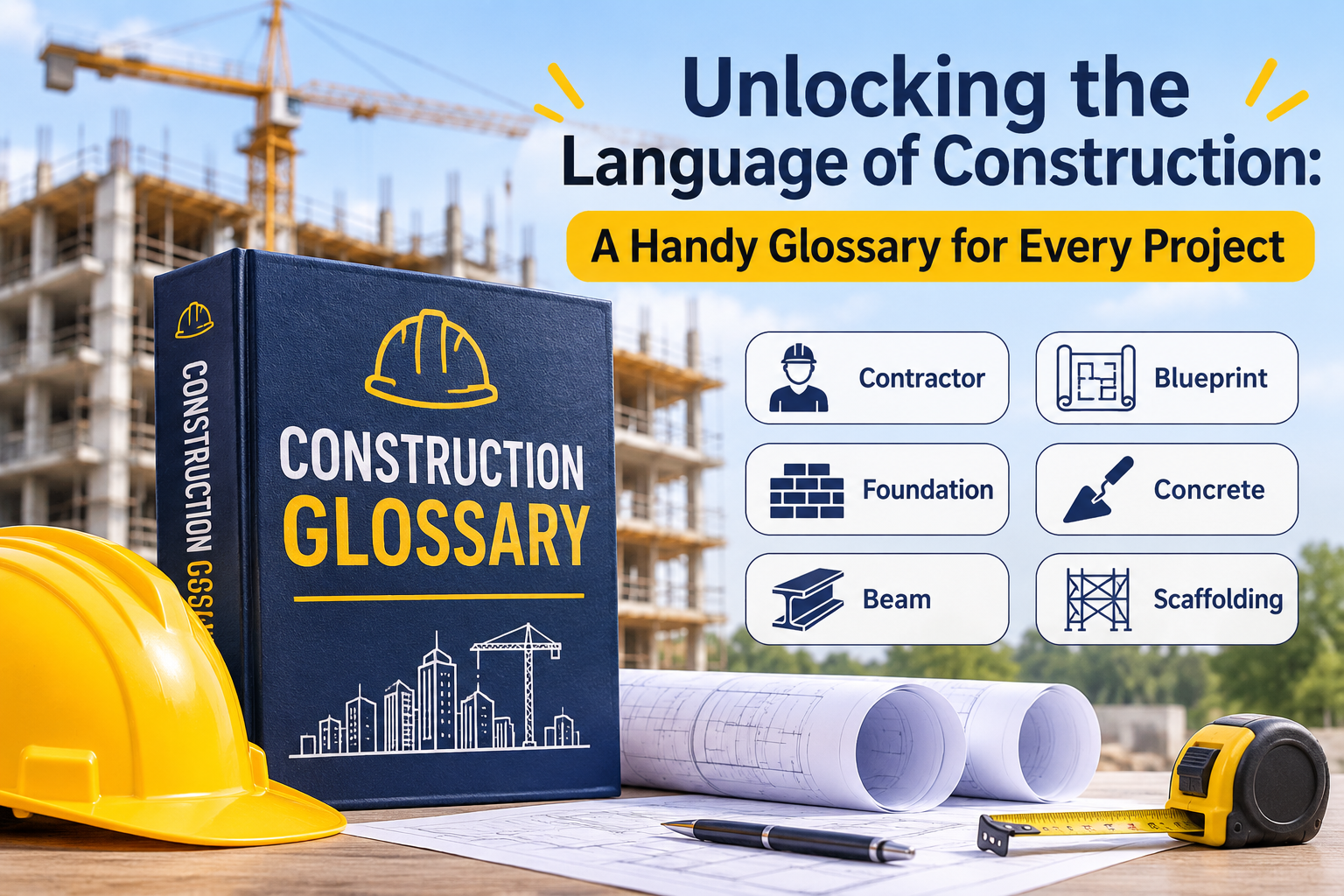
When you enter the world of construction, a basic understanding of general construction terms is your first step toward successful projects. These terms are the building blocks of communication in the industry, playing a vital role in every phase of a construction project. The term “blueprint” is a staple in the construction industry, referring to the detailed drawings that guide builders in the construction process. These documents outline every inch of a structure, ensuring that everyone involved in the project is on the same page. Think of a blueprint as the DNA of a building.
Another foundational concept is the “foundation” itself, which supports the entire structure and guarantees its stability. A solid foundation is critical, as it bears the weight of the building and anchors it to the ground. Without it, the structure would lack the support needed to stand tall. “Load-bearing walls” are another crucial element in construction terminology. These walls hold up the weight of the building and must be treated with care. Altering or removing them without professional guidance can lead to catastrophic structural failures.
Understanding “building codes” is essential for anyone involved in construction. These regulations ensure that projects meet safety and compliance standards. Ignoring building codes can result in fines or, worse, unsafe structures that put lives at risk. Lastly, “zoning laws” dictate how land can be used and what types of structures can be built. These laws vary by location and can affect the scope of your project. Knowing the zoning laws in your area can save you from costly legal headaches down the line.
 Essential Construction Terms for Every Project
Every construction project has its unique challenges, and understanding essential construction terms can make the difference between success and failure. These terms are the nuts and bolts that keep a project running smoothly. “Bidding” is an integral part of the construction process. It involves contractors proposing a price to complete a project. Understanding how bidding works can help you choose the right contractor and ensure that you’re getting the best value for your investment.
A “punch list” is a critical document used to detail items that need to be completed or corrected before a project is considered finished. This list ensures that all parties involved are aware of what needs to be done to meet project expectations. “Subcontractors” play an important role in the construction industry. They are hired to perform specific tasks such as plumbing or electrical work. Coordinating subcontractors effectively can streamline the construction process and improve the quality of work.
“Specifications” outline the materials and workmanship required for a project. They ensure that everyone involved understands the standards and expectations for the build. Clear specifications prevent misunderstandings and help maintain quality control. A “turnkey project” means the contractor handles all aspects from start to finish, delivering a ready-to-use product. This approach can save time and reduce stress for project owners, as they have a single point of contact for the entire project.
Our step-by-step Build with Confidence system walks you from concept to completion.
Understanding Contractor and General Contractor Jargon
f you’re involved in construction, understanding contractor jargon is vital. These terms are the language of those who build and manage projects, and knowing them can keep you in the loop.
A “general contractor” is the maestro of the construction orchestra, overseeing the entire project and coordinating subcontractors. They ensure that every part of the project is completed on time and within budget. “Change orders” are modifications to the original construction plans. They can impact the cost and timeline of a project, so understanding how to manage them is key to maintaining control over the project’s direction. The “scope of work” defines the specific tasks and responsibilities of each party involved in the project. A clear scope of work helps prevent disputes and ensures that everyone knows what is expected of them.
A “contract” is a legally binding agreement that outlines the terms of work to be completed. Understanding contract terms can protect you from legal issues and ensure that the project proceeds smoothly. “Lien waivers” are documents that verify payments have been made to contractors and subcontractors, protecting against legal claims. They are essential for ensuring that all parties are fairly compensated for their work. Not sure what your contract says? Request free advice or a cost proposal.
Navigating the Language of Design and Build
In the construction industry, the design and build phase is where creativity meets practicality. Understanding the terms used in this phase is crucial for successful project execution.
“Architects” are the visionaries behind the layout and appearance of structures. They ensure that buildings are not only functional but also aesthetically pleasing. Their designs are the blueprints from which builders work. A “design-build” contract combines design and construction services under one agreement. This approach streamlines the process, reducing the time and cost associated with traditional methods.
“Drafting” involves creating technical drawings used in construction. These drawings provide detailed instructions for builders, ensuring that the design is executed correctly. “Floor plans” offer a bird’s-eye view of the structure layout, including rooms and dimensions. They are essential for visualizing how a space will look and function once completed. “Renderings” are visual representations of a building’s design, often used in presentations to give stakeholders a glimpse of the finished product. They help communicate the architect’s vision and can be a powerful tool for securing project approval. Browse architects, designers, and contractors in our Service Providers directory.
Key Site and Project Terms for Smooth Operations
The success of any construction project hinges on smooth operations on the site. Knowing key site and project terms can help you keep things running like a well-oiled machine.
“Site preparation” involves clearing, grading, and preparing land for construction. This step is crucial for providing a stable base for the building and ensuring that the site is ready for work. “Groundbreaking” marks the official start of construction work on a site. It’s a significant milestone that sets the tone for the rest of the project. The “site supervisor” is responsible for managing daily operations and ensuring compliance with safety and quality standards. They are the eyes and ears on the ground, making sure everything is running smoothly.
“Logistics” involves planning and coordinating the movement of materials and equipment. Effective logistics management can reduce delays and keep the project on schedule. A “timeline” outlines the sequence and duration of tasks needed to complete a project on time. A well-structured timeline helps keep everyone on track and ensures that deadlines are met.
Safety Terms Every Construction Professional Needs
Safety is paramount in the construction industry, and understanding safety terms is crucial for protecting workers and ensuring compliance with regulations. “Personal protective equipment (PPE)” includes gear like helmets, gloves, and goggles designed to protect workers from potential hazards. Proper use of PPE is a fundamental aspect of site safety.
“OSHA” stands for the Occupational Safety and Health Administration, which sets and enforces safety standards in the workplace. Familiarity with OSHA regulations can help you maintain a safe construction site. “Safety audits” assess compliance with safety regulations and identify areas for improvement. Regular audits help ensure that safety protocols are followed and workers are protected.
“Hazard communication” involves informing workers of potential risks and safety measures. Clear communication is essential for preventing accidents and injuries on the job site. “Fall protection” systems prevent injuries from falls, a common hazard in construction. Implementing effective fall protection measures can save lives and prevent serious injuries.
Demystifying Sustainable Construction Vocabulary
As sustainability becomes more important, understanding sustainable construction vocabulary is essential. These terms reflect the industry’s shift toward environmentally friendly practices.
“LEED certification” recognizes buildings that meet high environmental standards. Achieving LEED certification can enhance a building’s value and appeal to environmentally conscious clients. “Green building” practices focus on sustainability and reducing environmental impact. These practices include using eco-friendly materials and energy-efficient designs. “Renewable resources” are materials that can be replenished naturally, such as bamboo or recycled steel. Using renewable resources reduces the environmental footprint of construction projects. “Energy efficiency” involves using less energy to perform the same tasks, which reduces costs and environmental impact. Implementing energy-efficient designs can lead to significant cost savings over a building’s lifespan.
“Water conservation” strategies minimize water use and waste in construction processes. These strategies are vital for sustainable development and responsible resource management.
Must-Know Terms for Effective Communication on Site
Effective communication on the construction site is key to project success. Knowing these terms will help you communicate clearly and efficiently with your team.
The “project manager” oversees the planning, execution, and completion of a construction project. They coordinate all aspects of the project, ensuring it stays on track and within budget. “Daily reports” document progress, issues, and activities on a construction site each day. These reports keep all stakeholders informed and help identify potential problems early. “RFI” stands for Request for Information, a formal request for clarification on project details. RFIs help resolve uncertainties and ensure that everyone is on the same page.
A “kickoff meeting” gathers all stakeholders to align on project goals and expectations before starting work. This meeting sets the stage for successful collaboration. “Toolbox talks” are informal safety meetings held on-site to discuss job-specific safety practices. They are an effective way to reinforce safety protocols and address any concerns.
Glossary of Commonly Used Terms in Construction Projects
Understanding a glossary of commonly used construction terms can help you navigate projects with ease. These terms are the language of the industry, and knowing them can enhance your effectiveness on the job.
“Concrete” is a mixture of cement, water, and aggregates used to build structures. It is a versatile material known for its strength and durability. “Rebar” refers to steel bars used to reinforce concrete structures. Rebar adds tensile strength to concrete, preventing cracking and increasing its load-bearing capacity. “Drywall” is a panel used for constructing interior walls and ceilings. It is a lightweight, cost-effective material that is easy to install and finish.
“HVAC” stands for heating, ventilation, and air conditioning systems in buildings. These systems are essential for maintaining comfortable indoor environments. “Footprint” describes the area covered by a building on the ground. Understanding a building’s footprint is important for planning and compliance with zoning laws.
In conclusion, unlocking the language of construction empowers you to tackle projects with confidence, ensuring that you communicate effectively and understand the nuances of the industry. By mastering these terms, you’re not only enhancing your knowledge but also paving the way for successful projects. What construction terms do you find most challenging, and how have they impacted your projects? Stuck on a term? Ask Gary your question. Let’s continue the conversation and share insights in the comments below!
Ready to put these terms to work? Sign up free and post your project.
Frequently Asked Questions
What is another name for construction?
Construction is often referred to as “building” or “erection.” In the industry, you might also hear terms like “development” or “fabrication,” depending on the context. While “building” is the most common synonym, these terms can vary slightly in meaning. They generally refer to the process of assembling structures or infrastructure. Whether you’re working on a skyscraper or a simple home renovation, these terms help convey the essence of creating something from the ground up.
What is a construction checklist?
A construction checklist is a detailed document that outlines tasks, materials, and steps essential for completing a construction project. It serves as a roadmap to ensure everything is on track and nothing is overlooked. From initial planning stages to final inspections, a checklist helps manage timelines, budgets, and quality standards. Whether you’re a seasoned professional or a DIY enthusiast, having a comprehensive checklist can streamline your workflow and ensure successful project completion.
What is a description of construction?
Construction, at its core, is the art and science of building or assembling infrastructure, facilities, or structures. It involves a variety of activities, including planning, design, financing, and project management. From residential homes to towering skyscrapers, construction encompasses the entire process of bringing architectural visions to life. It combines various trades and skills, leveraging technology and labor to create functional and aesthetic spaces in our environment.
What are construction details in architecture?
Construction details in architecture refer to the specific drawings and specifications that illustrate how different components of a building come together. These details include materials, dimensions, and methods of assembly, ensuring that the structure is both safe and functional. By providing clarity on how parts like walls, floors, and roofs should be constructed, these details help architects, engineers, and builders maintain consistency and quality throughout the building process. They bridge the gap between design concepts and practical implementation.