The Hidden Pitfalls HOA Boards Face When They Ignore Plumbing Problems in High‑Rise Condos
Plumbing failures in high‑rise condominium buildings are never sudden. They are predictable, progressive, and preventable. Yet many HOA boards fall into the same costly traps reacting to emergencies instead of planning for the inevitable. When boards ignore the systemic issues surrounding aging plumbing systems, owners ultimately pay the price through assessments, insurance hikes, and property damage.
This article outlines the most common pitfalls HOA boards face when they fail to address the problems highlighted in Minimizing or Eliminating Assessments for Plumbing Replacements in Condo Buildings. Understanding these pitfalls is the first step toward protecting owners, preserving property values, and avoiding unnecessary financial shocks.
-
Operating Reactively Instead of Proactively
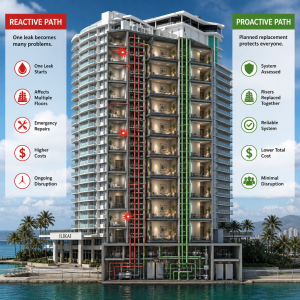
Many boards wait until pipes fail before taking action. This reactive approach leads to:
- Emergency repairs at premium rates
- Water damage affecting multiple units
- Insurance claims and higher premiums
- Owner frustration and distrust
Plumbing systems have a predictable lifespan. Ignoring early warning signs—slow drains, odors, corrosion, backups—only guarantees more expensive failures later.
Pitfalls |
Description |
Consequences when not addressed |
|
“If it’s not broken, don’t fix it” mindset |
Boards wait for failures instead of planning replacements. |
Sudden catastrophic pipe failures |
|
Emergency assessments ($30k–$50k per unit) |
||
|
Water damage, mold, insurance claims |
||
|
Lack of systematic inspections |
Boards don’t use ultrasonic, camera, destructive, or magnetic particle testing. |
Hidden corrosion goes undetected |
|
Stack failures without warning |
||
|
Higher repair costs due to late discovery |
||
| Ignoring warning signs |
Slow drains, odors, gurgling, fluctuating toilet levels, corrosion. |
Sewage backups |
|
Multi‑unit water damage |
||
|
Accelerated deterioration of DWV stacks |
||
| Not identifying remodeled units |
Boards fail to track which units have exposed plumbing. |
Lost opportunities to replace pipes at low cost |
|
Inconsistent materials across stacks |
||
|
Repeated demolition of finished units |
||
|
Failure to coordinate adjacent‑unit work |
Boards don’t use the “good neighbor concept.” |
Higher cumulative costs |
|
More disruption to residents |
||
|
Inconsistent vertical stack replacement |
||
|
Poor material purchasing strategy |
Contractors buy materials instead of the HOA buying at cost. |
20–40% markup on materials |
|
Budget overruns |
||
|
Reduced reserve funds |
||
|
No standard performance specifications |
Contractors use different materials and methods. |
Inconsistent quality |
|
Premature failures |
||
|
Increased liability for the HOA |
||
|
Not pre‑qualifying contractors |
No vetting for licensing, insurance, bonding, or past performance. |
Poor workmanship |
| Project delays | ||
| Higher risk of legal disputes | ||
| Lack of a master unit list & project directory |
No centralized tracking of unit conditions or contractor activity. |
Miscommunication |
|
Lost records |
||
|
Repeated work or missed work |
||
|
Failure to phase work with remodels |
Plumbing replacement not tied to unit upgrades. |
Higher total project cost |
|
More disruption |
More disruption |
|
|
Missed opportunities to replace multiple units at once |
||
|
Not inspecting climate‑exposed sides of building |
Weathering accelerates pipe deterioration. |
Cracks, leaks, corrosion |
|
Uneven building wear |
||
|
Higher long-term repair costs |
||
|
Not using prototype unit initiative |
No demonstration unit for transparency. |
Owner resistance |
|
Misunderstanding scope of work |
Misunderstanding scope of work |
|
|
Delays in approvals |
-
Skipping Building‑Wide Inspections
Boards often rely on complaints instead of data. Without systematic inspections such as:
- Camera scoping
- Ultrasonic testing
- Vertical stack sampling
- Reviewing remodeled units
Boards end up with incomplete information. This leads to under‑scoped projects, incorrect assumptions about pipe conditions, and surprise failures in areas thought to be “fine.”
Inspections are the only way to determine remaining useful life and plan intelligently.
-
Choosing Pipe Relining Without Understanding Its Limitations
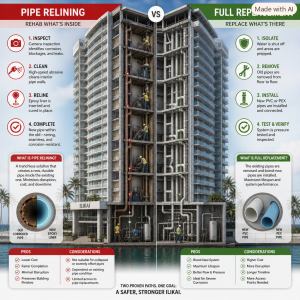
Relining is often marketed as a cheaper, less disruptive alternative. But boards frequently overlook:
- Relining cannot fix collapsed or severely corroded pipes
- Sleeves can peel, clog, or fail
- Relining is often unsuitable for in‑wall vertical stacks
- Failed relining projects cost more to undo than full replacement
Boards that choose relining as a shortcut often end up paying twice.
-
Failing to Integrate Plumbing into Long‑Term Capital Planning
Plumbing replacement is not a surprise event—it’s a lifecycle event. When boards fail to include plumbing in reserve studies:
- Assessments become unavoidable
- Owners are blindsided
- Financing becomes rushed
- Replacement schedules become chaotic
Your phased “replace during remodels” strategy eliminates assessments, but boards rarely adopt it without strong leadership.
-
Poor Contractor Vetting and Lack of Standard Specifications
Without clear specifications and vetted contractors:
- Work quality varies between units
- Materials are inconsistent
- Repairs fail prematurely
- HOA liability increases
- Owners hire unqualified contractors
A multi‑year plumbing replacement program requires governance, not guesswork.
-
Allowing Isolated Repairs Instead of Coordinated Vertical Replacement
Boards often allow owners to fix plumbing only within their unit. This leads to:
- Repeated demolition of the same walls
- Higher cumulative costs
- Inconsistent pipe materials in the same vertical
- Increased risk of future failures
Your “good neighbor concept” solves this problem by coordinating adjacent units, but boards rarely enforce it.
-
Poor Communication and Lack of Owner Education
Boards often communicate too late or too vaguely. When owners don’t understand:
- Why pipes fail
- What inspections revealed
- Why certain materials are chosen
- How phasing reduces costs
- How assessments can be avoided
They resist projects, delay approvals, and create political conflict.
Transparency is not optional—it’s essential.
-
Not Purchasing Materials at Cost
Boards often let contractors purchase materials, resulting in:
- 20–40% markups
- Inconsistent inventory
- Delays due to supply shortages
- No control over quality
Purchasing materials wholesale is one of the easiest ways to reduce project costs, yet many boards overlook it.

-
Ignoring Coordination with Other Building Systems
Plumbing replacement interacts with:
- AC condensate drains
- Electrical upgrades
- Fire sprinklers
- Waterproofing
- Asbestos abatement
When boards fail to coordinate these systems, they face rework, additional assessments, and code compliance issues.
-
Underestimating the True Cost of Doing Nothing
The most expensive mistake is inaction. Delaying plumbing replacement leads to:
- Concrete spalling
- Rebar corrosion
- Mold growth
- Structural damage
- Higher insurance premiums
- Emergency special assessments
- Lower property values
Plumbing failures are not random—they are the predictable outcome of deferred maintenance.
A Simple Truth for HOA Boards
Plumbing failures are not a surprise they are the predictable outcome of inaction. Boards that plan proactively save owners money, protect property values, and eliminate the need for massive assessments.
High‑rise plumbing replacement doesn’t have to be disruptive, expensive, or politically painful. With inspections, planning, transparency, and coordinated replacement, boards can turn a potential crisis into a manageable, phased improvement that benefits everyone.